If you’re obsessed with old money decor, think less “perfectly decorated showroom” and more beautiful house where someone’s fabulous grandmother left behind half the furniture. The best old money home decor ideas mix traditional furniture, antique-inspired artwork, rich wood tones, vintage rugs, collected books, elegant lighting, and pieces that look like they have an actual story.
And thankfully, you don’t need an inherited estate—or an inherited bank account—to get the look. These old money decor ideas are all about choosing timeless materials, layering pieces from different eras, and creating a home that feels elegant without looking overly styled. From sophisticated old money living room decor to smaller details you can steal for practically any room, these ideas will help you create that expensive, collected-over-time aesthetic.
How to Make Old Money Decor Look Collected—Not Costume-y
The biggest mistake with the old money aesthetic is trying to recreate it by buying a checklist of “luxury” things. A tufted chair, gold mirror, stack of decorative books, and random horse painting do not automatically make a room look inherited.
The magic is in the mix.
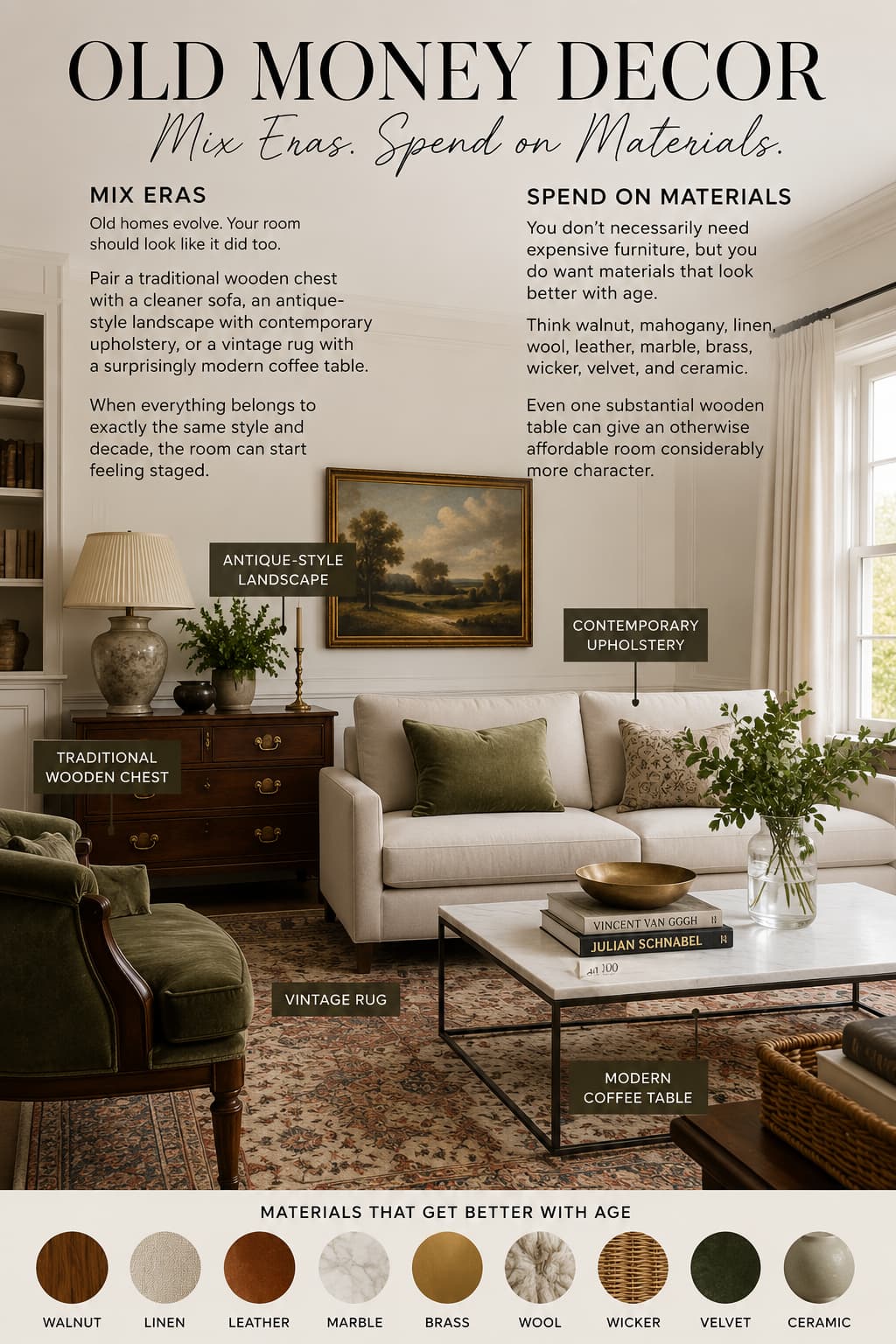
Mix Eras Instead of Matching Everything
Old homes evolve. Your room should look like it did too. Pair a traditional wooden chest with a cleaner sofa, an antique-style landscape with contemporary upholstery, or a vintage rug with a surprisingly modern coffee table.
When everything belongs to exactly the same style and decade, the room can start feeling staged.
Spend Your Visual Budget on Materials
You don’t necessarily need expensive furniture, but you do want materials that look better with age. Think walnut, mahogany, linen, wool, leather, marble, brass, wicker, velvet, and ceramic.
Even one substantial wooden table can give an otherwise affordable room considerably more character.
Let Some Things Be Imperfect
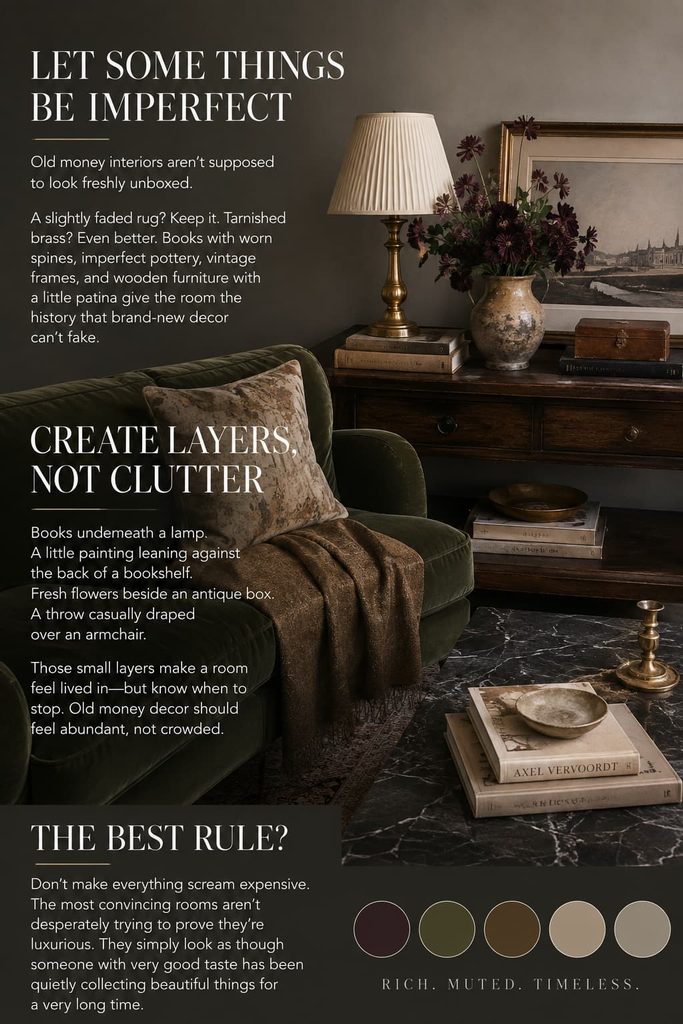
Old money interiors aren’t supposed to look freshly unboxed.
A slightly faded rug? Keep it. Tarnished brass? Even better. Books with worn spines, imperfect pottery, vintage frames, and wooden furniture with a little patina give the room the history that brand-new decor can’t fake.
Create Layers, Not Clutter
Books underneath a lamp. A little painting leaning against the back of a bookshelf. Fresh flowers beside an antique box. A throw casually draped over an armchair.
Those small layers make a room feel lived in—but know when to stop. Old money decor should feel abundant, not crowded.
And perhaps the best rule? Don’t make everything scream expensive. The most convincing rooms aren’t desperately trying to prove they’re luxurious. They simply look as though someone with very good taste has been quietly collecting beautiful things for a very long time.
Give Your Mantel a Little Inherited-Wealth Energy
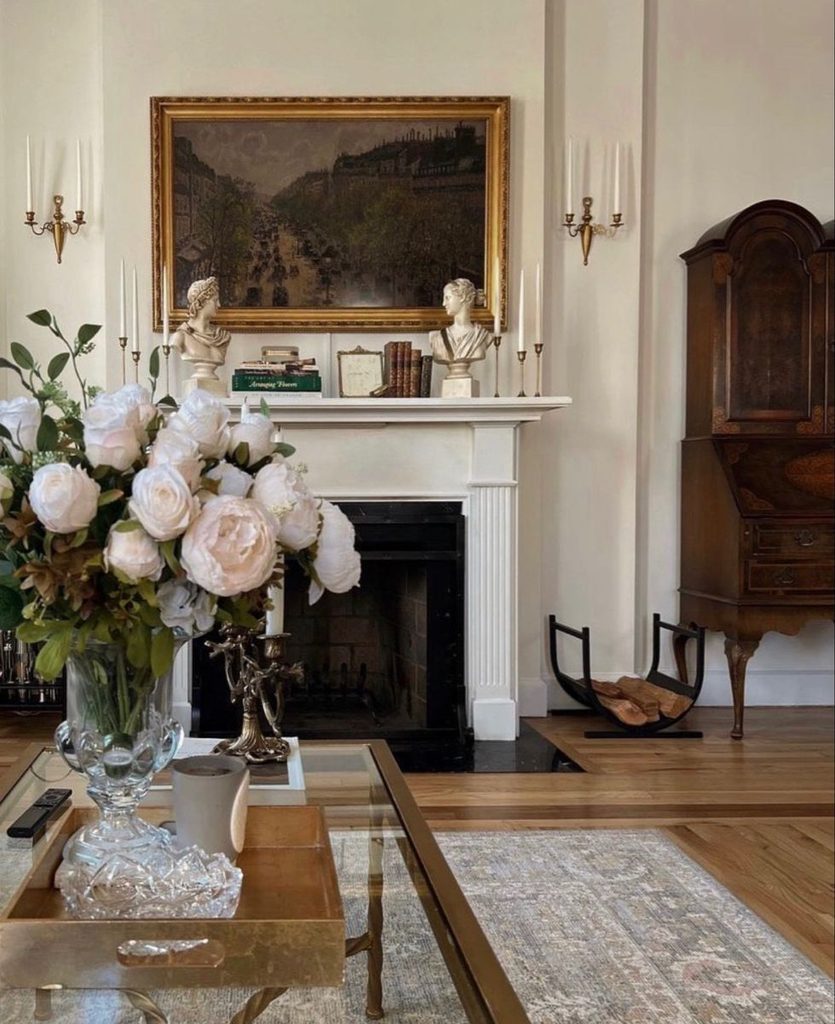
This is exactly how you do old money decor without making your living room look like a themed set. The oversized traditional painting immediately gives the room history, while the marble busts, antique books, brass candlesticks, classic sconces, and dark wood furniture make everything feel collected over decades—not ordered in one afternoon. And that huge arrangement of slightly unruly white flowers? Very “these came from the garden at the country house.” The secret is mixing refined pieces with just enough imperfection so the room feels lived-in rather than staged.
How to Get the Look: Start with one substantial piece of traditional artwork above the fireplace, preferably a landscape, portrait, or vintage-style oil painting in an aged gold or wood frame. Layer the mantel with old books, brass or silver candlesticks, small sculptures or busts, and objects at different heights instead of arranging everything perfectly symmetrically. Bring in dark antique-style wood furniture to contrast with creamy walls, then soften all that formality with oversized fresh-looking flowers, a faded traditional rug, and a few pieces that look as though they’ve been in the family forever.
Turn Down the Big Light—Old Money Would Never
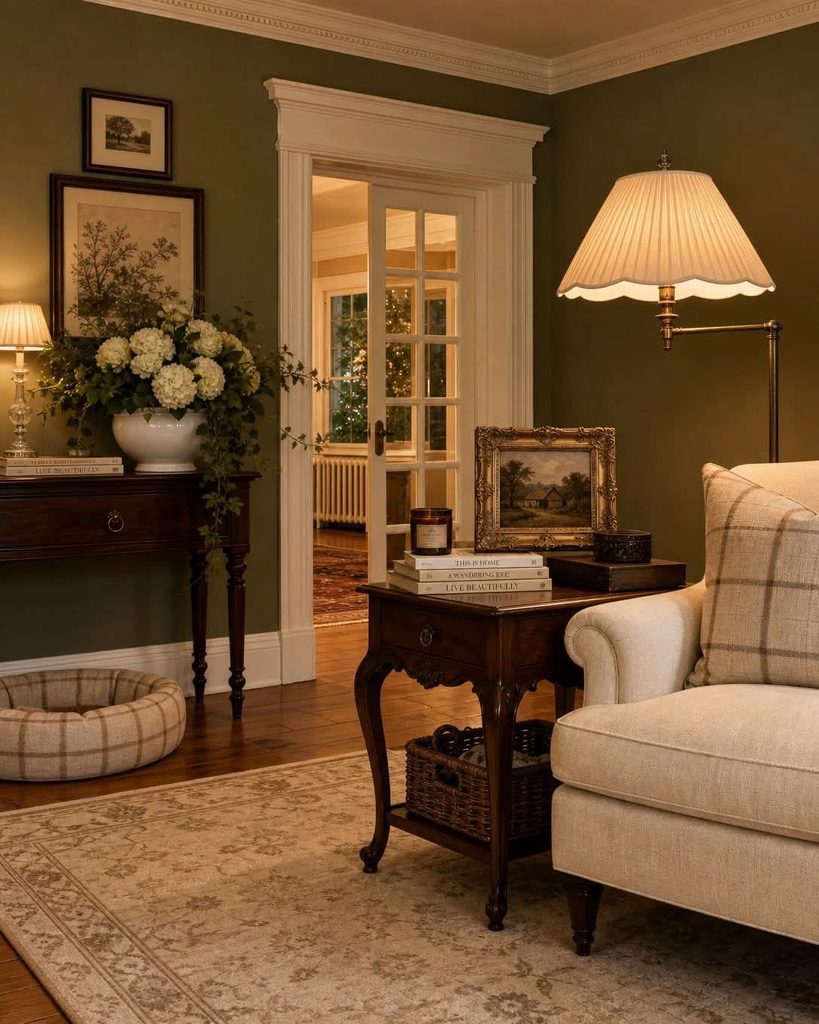
This room is proof that old money decor is basically allergic to harsh overhead lighting. The pleated lampshades, warm table lamps, and brass swing-arm light create that soft, glowy atmosphere that makes everything—from the olive walls to the dark wood furniture—look richer. Add the botanical artwork, slightly faded rug, stacks of books, and overflowing hydrangeas, and suddenly the room feels like it has existed beautifully for the last 80 years.
How to Get the Look: Layer several smaller light sources around the room instead of relying on one ceiling fixture. Look for pleated or gathered shades, brass lamp bases, swing-arm lamps, ceramic lamps, and warm bulbs, then place them at different heights. Pair that softer lighting with muddy heritage colors like olive, tobacco, burgundy, and cream, plus dark wood furniture, traditional artwork, vintage-style rugs, books, and big arrangements of flowers. The goal is warm, layered and slightly nostalgic—not bright, white and showroom-perfect.
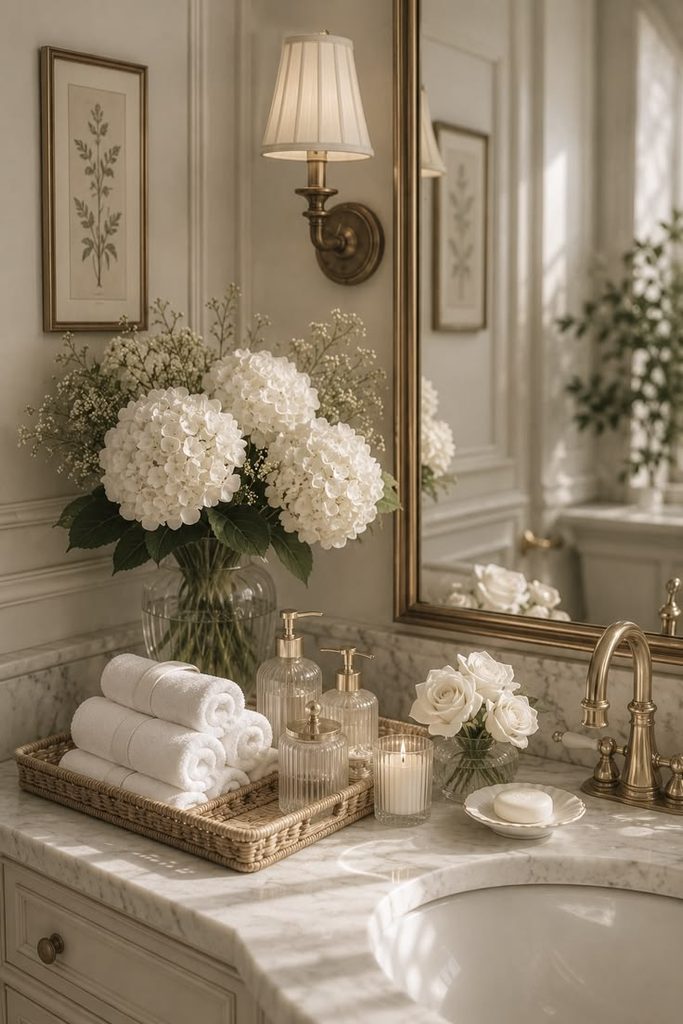
Make the Bathroom Feel Like a Fancy Little Hotel
Old money style absolutely does not stop at the living room door. This bathroom gets it right with creamy marble, antique brass, a traditional framed mirror, pleated wall sconce, delicate botanical art, and an almost unnecessarily gorgeous arrangement of white hydrangeas. Even the soap dispenser looks like it has a trust fund.
How to Get the Look: Skip trendy matching bathroom sets and focus on materials that feel timeless. Choose marble or marble-look surfaces, aged brass hardware, framed mirrors, pleated sconces, vintage-inspired artwork, ribbed glass accessories, woven trays, and fluffy white towels. Then add fresh-looking flowers or greenery to soften all those polished finishes. Keep the palette restrained—cream, ivory, warm white, brass, and soft green—and your bathroom will feel quietly luxurious without screaming “I was trying to make this look expensive.”
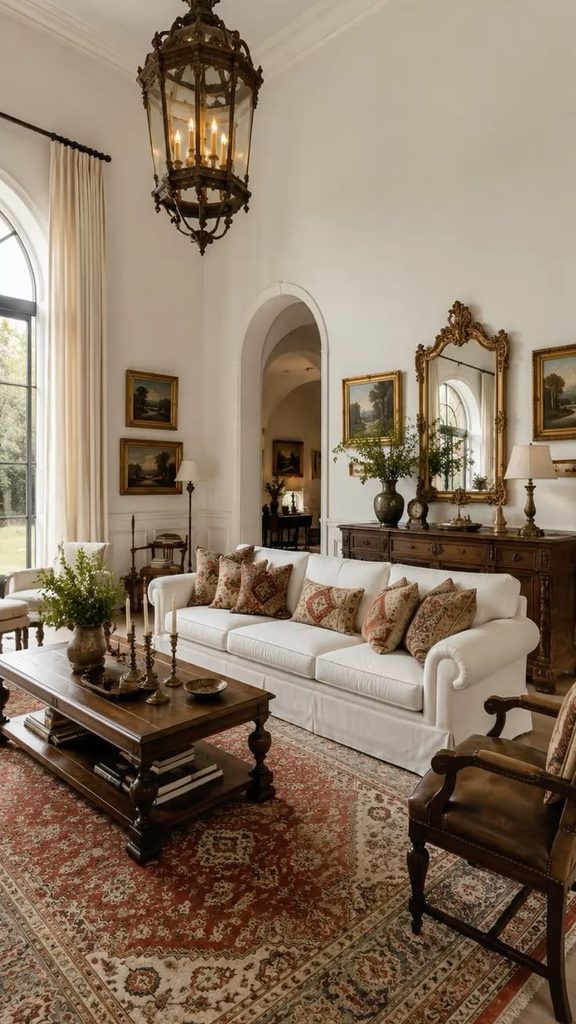
Mix “Inherited” Pieces With Something Fresh
This room looks like the family has owned the house since 1897, but someone in the family also knows how to shop. The secret is that old money decor isn’t about making everything antique—it’s about mixing traditional pieces with enough freshness that the room feels lived-in rather than preserved behind velvet ropes. The crisp white sofa against the dark carved furniture, ornate gold mirror, Persian-style rug, landscape paintings, and dramatic lantern is exactly why this works.
How to Get the Look: Start with one or two substantial traditional pieces—think a dark wood coffee table, antique-style console, carved armchair, or vintage rug—then lighten everything up with cream upholstery and simple curtains. Layer in ornate gold frames, landscape paintings, patterned pillows, aged brass candlesticks, classic lamps, pottery, and books instead of filling the room with trendy decorative objects. Most importantly, mix ages, finishes, and styles a little. Old money decor should look like the room evolved over decades, not like the entire thing arrived Tuesday afternoon in matching boxes.
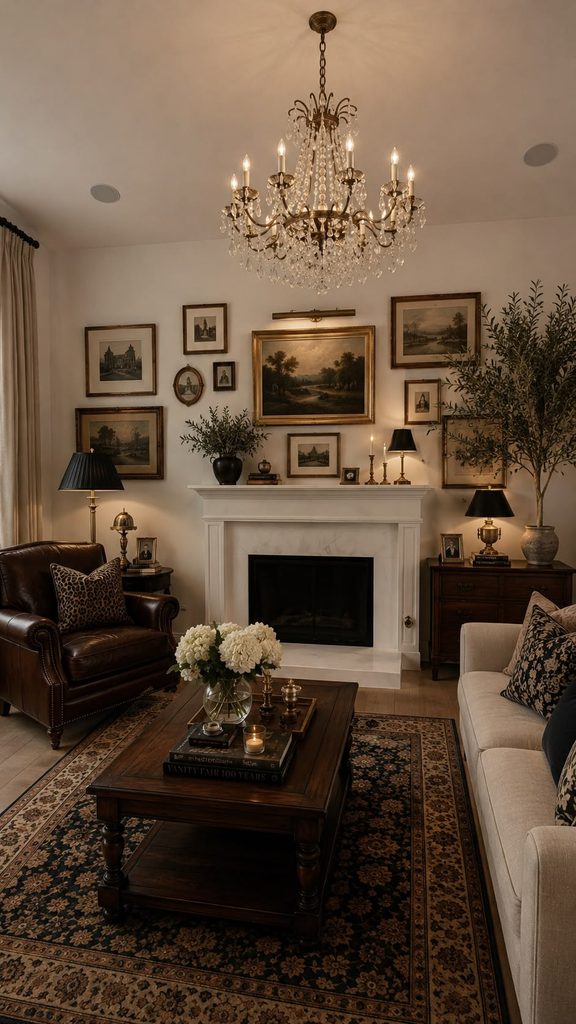
Make the Lighting Look Like It Has a Trust Fund
Nothing kills the old money decor mood faster than one sad overhead light blasting the entire room. This space gets it right: a crystal chandelier brings the drama, while black-shaded table lamps, a picture light, and candlesticks create smaller pools of warm light around the room. The result feels moody, layered, and expensive without trying desperately to prove it.
How to Get the Look: Treat lighting like part of the decor. Start with a statement fixture—an antique-style crystal chandelier, brass lantern, or traditional pendant—then add table lamps and picture lights at different heights. Look for aged brass, pleated or dark fabric shades, crystal, and classic silhouettes, and always choose warm bulbs over harsh white lighting. Bonus points for candles, because apparently generational wealth looks better by candlelight.
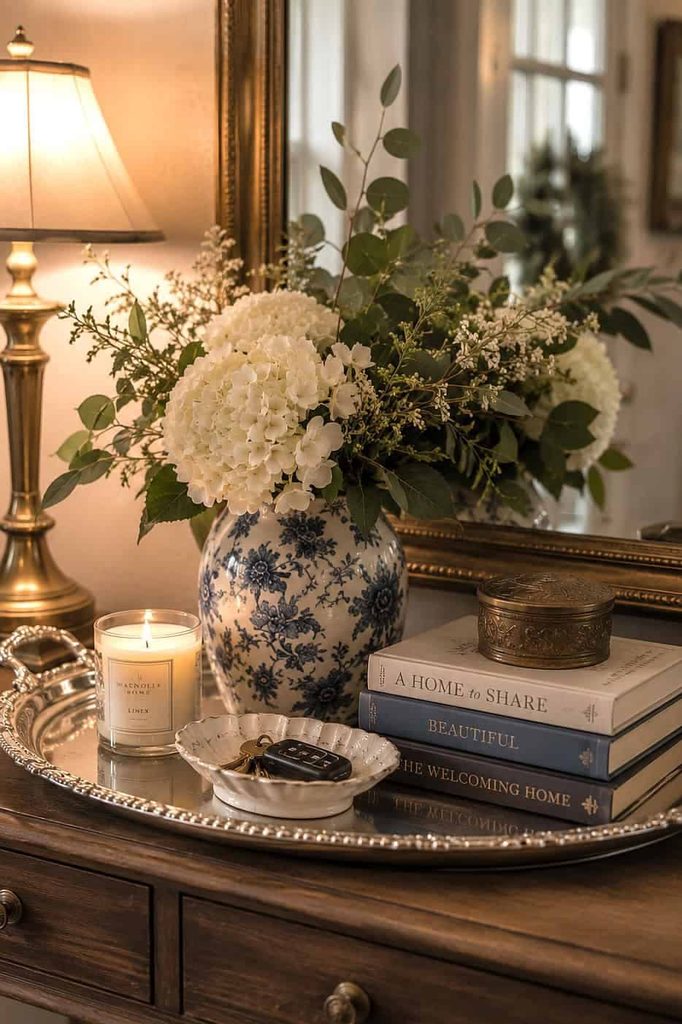
Style the Little Details Like They’ve Been Collected for Decades
This is where old money decor gets really good. Instead of filling a surface with random trendy accessories, this look layers pieces that feel like they have a story: blue-and-white porcelain, fresh hydrangeas, old books, silver trays, brass objects, and one beautifully aged mirror. It’s polished, but thankfully not “I bought the entire vignette in aisle seven.”
How to Get the Look: Start with one traditional anchor piece, like a ginger jar, antique-style vase, silver tray, or brass lamp, then layer in two or three smaller objects with different heights and finishes. Add hardcover books, a small decorative box or dish, and loose-cut greenery or classic flowers like hydrangeas. Keep the palette restrained and let wood, brass, silver, porcelain, linen, and greenery provide the texture—the secret is making everything look accumulated rather than overly coordinated.
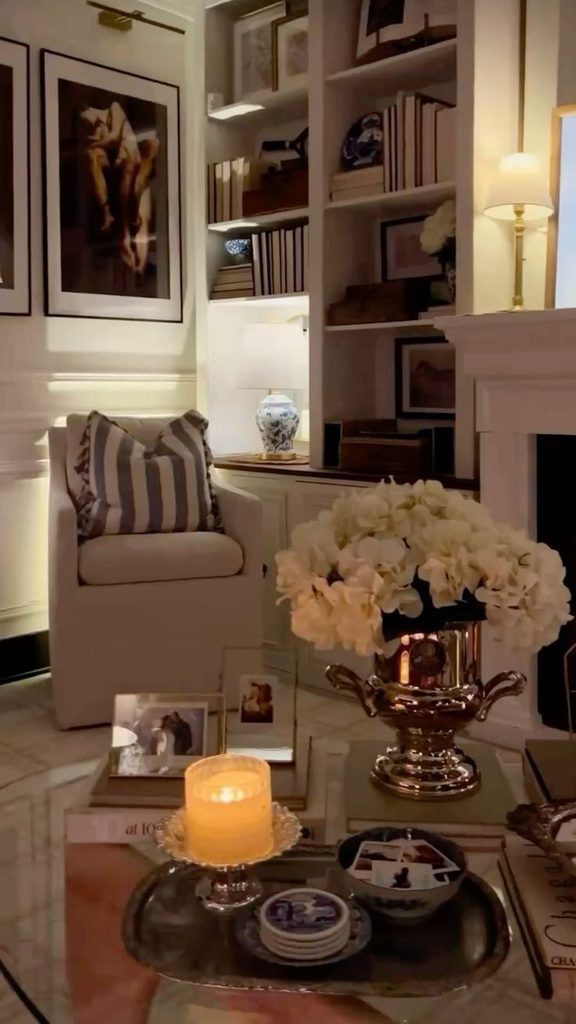
Build a Reading Corner That Says “I Own First Editions”
Old money interiors almost always have one thing modern rooms desperately need: somewhere you’d actually want to sit. This little corner feels incredibly cozy because the built-in bookshelves, oversized armchair, striped pillow, framed artwork, warm lamps, flowers, and stacks of books make it feel lived-in rather than staged. It’s giving private library after dinner, not “decorative chair nobody is allowed to touch.”
How to Get the Look: Claim an empty corner and add a deep upholstered armchair in cream, oatmeal, plaid, stripe, or another classic fabric. Surround it with books—real ones you actually like—then add a small lamp with a warm shade, framed artwork, a vintage-style vase, and a side table within reach. If you have built-ins, don’t style every shelf identically; mix vertical books, horizontal stacks, framed photos, porcelain, small antiques, and intentional empty space so the collection looks like it evolved naturally over time.
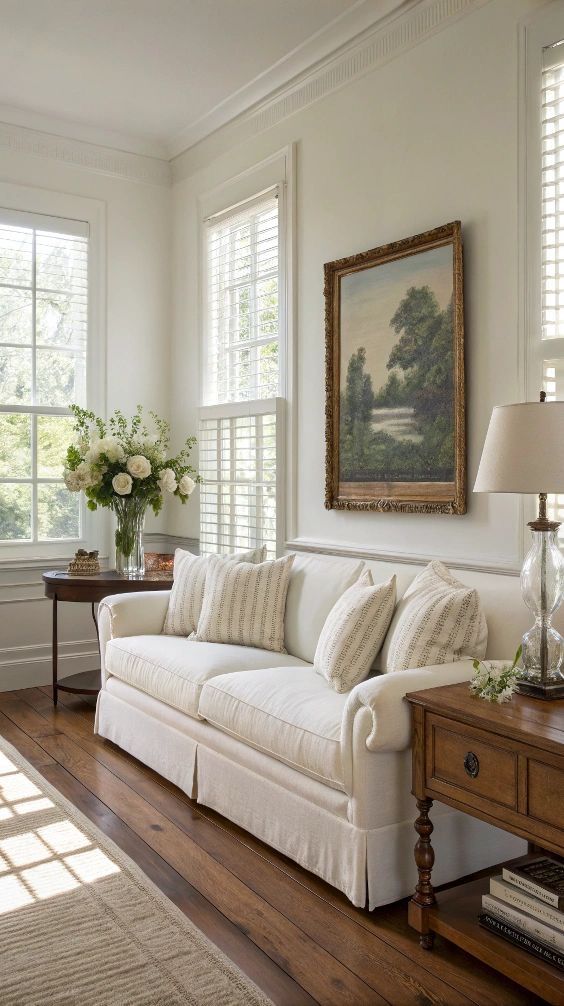
Let One Beautiful Antique-Looking Piece Do the Heavy Lifting
You do not need to turn your living room into a museum gift shop to get the old money look. Here, one traditional landscape painting in an ornate aged-gold frame gives an otherwise light, simple room instant history. Paired with warm wood furniture, crisp upholstery, classic lamps, and fresh flowers, it feels quietly expensive without screaming, “Please notice how sophisticated I am.”
How to Get the Look: Choose one substantial piece of traditional artwork—think landscapes, botanical studies, equestrian art, portraits, or vintage oils—and give it enough space to command attention. Look for antique brass, aged gold, dark wood, or carved frames rather than something ultra-modern. Then keep the furniture around it relatively restrained with cream upholstery, warm wood, subtle patterns, and natural textures. The contrast between something that feels old and a room that feels fresh is exactly what makes old money decor work.
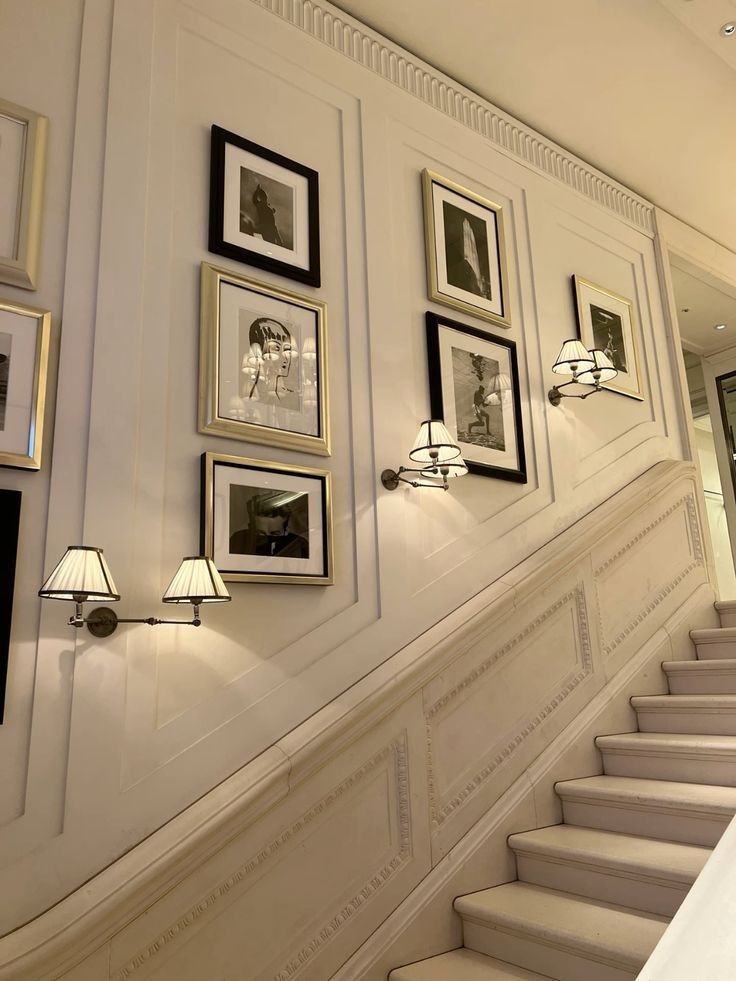
Make Your Staircase Feel Like a Private Members’ Club
A staircase is prime decorating real estate, and old money decor absolutely refuses to waste it. The tailored wall molding, black-and-white photography, mixed black and silver frames, and tiny pleated-shade sconces make this feel more like the staircase of an elegant London townhouse than a forgotten pass-through space. And those little lamps? Completely unnecessary in the best possible way.
How to Get the Look: Add picture-frame molding or decorative wall trim first to give the staircase architectural character. Then hang a restrained collection of black-and-white photography, portraits, sketches, or vintage prints that follows the upward angle of the stairs. Mix black, antique silver, and muted metallic frames rather than making everything perfectly identical, and finish with small brass or bronze sconces with pleated fabric shades between the artwork. Keep the palette creamy and tonal so the molding, lighting, and collected art—not a trendy paint color—create the drama.
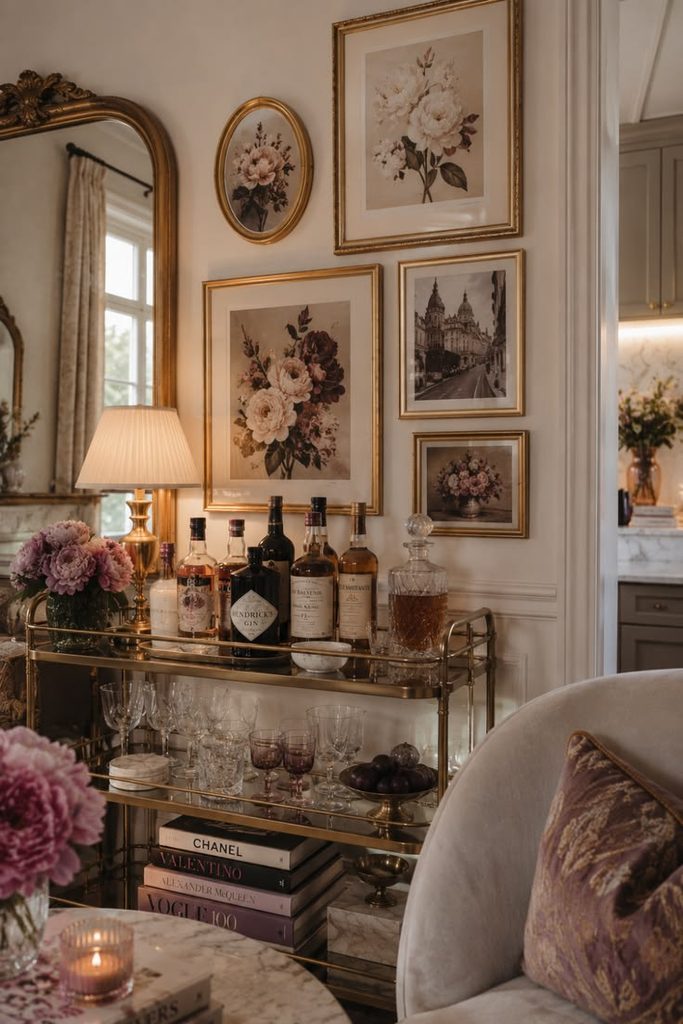
Give Your Bar Cart Country-Club Energy
A bar cart can go tacky very quickly, but this one understood the assignment. Brass, cut crystal, vintage-style glassware, fresh flowers, stacked fashion books, and a softly lit gallery wall turn something functional into a full old money decor moment. It feels like cocktails are served at five and somebody’s grandmother definitely has a preferred gin.
How to Get the Look: Start with a brass, antique-gold, or dark wood bar cart and resist the urge to cover every inch. Display a small edit of beautiful bottles alongside cut-crystal decanters, coupes, wine glasses, or vintage glassware, then soften everything with flowers and a petite lamp nearby. Above it, create a collected gallery wall using botanical prints, old photographs, landscapes, and antique-style gold frames in different sizes. Finish with a few beautiful books or a silver dish on the lower shelf—the combination of practical pieces and decorative treasures is what makes it feel inherited rather than styled yesterday.
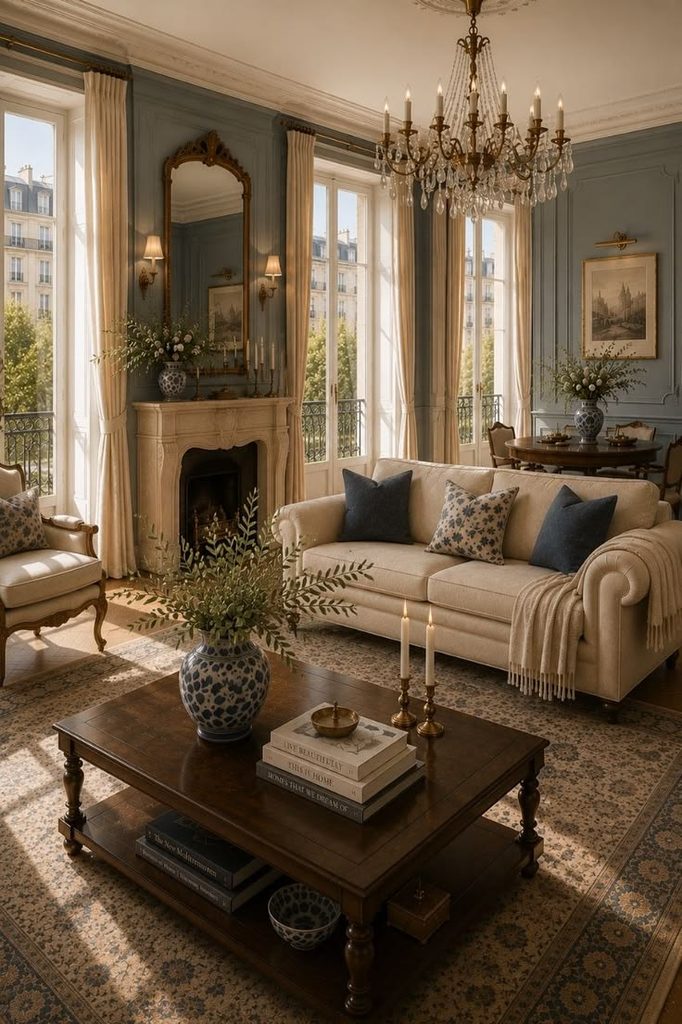
Steal a Little Inspiration From a Parisian Apartment
This is old money decor at its prettiest: tall windows, dramatic molding, an ornate mirror, a crystal chandelier, traditional furniture, and just enough blue to keep all that cream from becoming painfully predictable. Nothing feels overly decorated, yet the room has layers everywhere you look. Basically, it whispers Paris apartment with family money without requiring the actual Paris apartment.
How to Get the Look: Build the room around a sophisticated palette of dusty blue, warm cream, dark walnut, antique brass, and soft ivory. Add architectural character with picture-frame molding or substantial crown molding, then bring in one or two statement pieces like an ornate gilded mirror, crystal chandelier, traditional wood coffee table, or antique-style chair. Keep upholstery relatively quiet and introduce pattern through a vintage-inspired rug, small floral pillows, and blue-and-white porcelain. Finish with long curtains hung high and plenty of natural greenery—the room should feel elegant, comfortable, and collected, never precious.
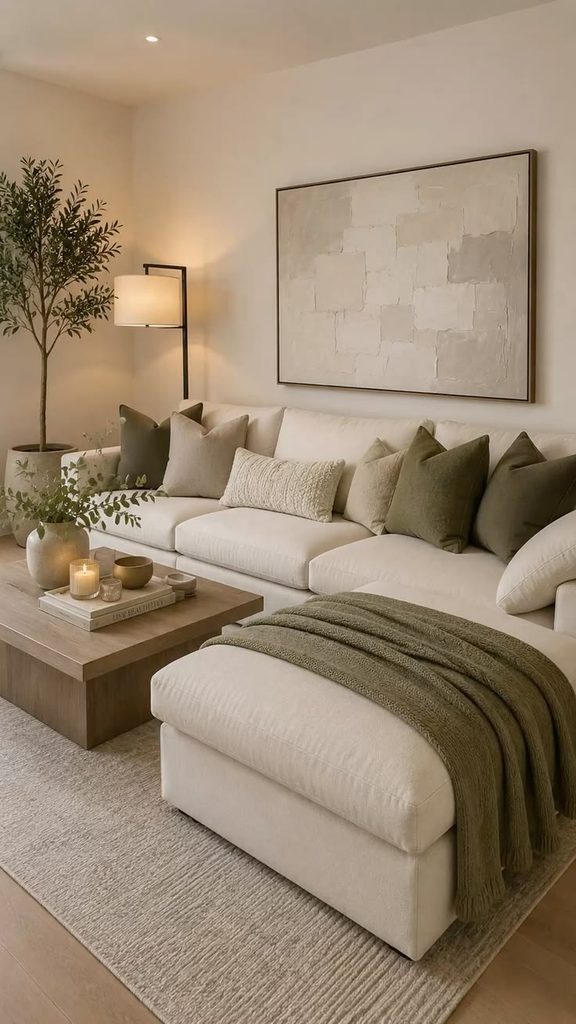
Quiet Luxury Still Needs a Little Personality
This is what happens when old money decor meets modern minimalism—and yes, the two can absolutely date. The oversized cream sectional, pale oak coffee table, textured artwork, olive-green accents, and understated greenery keep everything serene without making the room look like a beige waiting room. It’s less English manor house, more the granddaughter renovated the guesthouse.
How to Get the Look: Start with a warm neutral foundation of ivory, oatmeal, taupe, and natural wood, then introduce one muted heritage color like olive, tobacco, burgundy, or navy. Choose substantial furniture with simple silhouettes, but prioritize beautiful materials—linen-look upholstery, wool rugs, solid wood, stone, and textured fabrics. Add one oversized piece of understated art instead of lots of tiny accessories, bring in a sculptural tree or branches, and keep the styling edited. Old money style doesn’t always need antiques everywhere; sometimes the luxury is simply quality, scale, texture, and restraint.
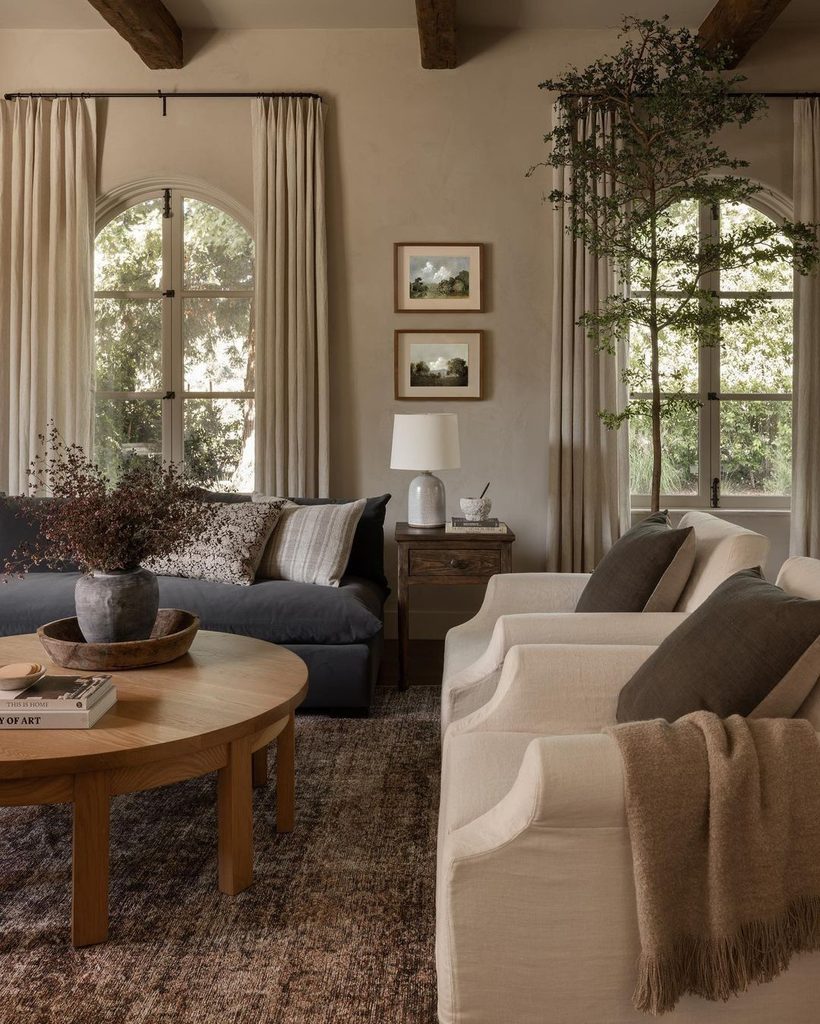
Make “Rustic” Look Like It Summers in Provence
This is proof that old money decor doesn’t have to mean chandeliers, gilded everything, and furniture that looks afraid of children. The exposed wood beams, linen curtains, worn wood furniture, earthy pottery, oversized greenery, and slightly moody palette give this room an understated European-country feel. It looks beautiful because nothing feels too new, too perfect, or too coordinated—which is kind of the whole point.
How to Get the Look: Focus on natural materials that get better with age: solid wood, linen, aged pottery, woven wool, plaster, and stone. Keep your palette earthy with warm cream, chocolate brown, charcoal, faded black, taupe, and muted green, then mix refined upholstery with chunkier, more rustic furniture. Skip overly polished accessories in favor of ceramic vessels, landscape art, vintage-looking books, branches, and simple lamps. And please don’t match every piece of wood—the slight variation is what makes the room feel collected over generations instead of delivered Tuesday.
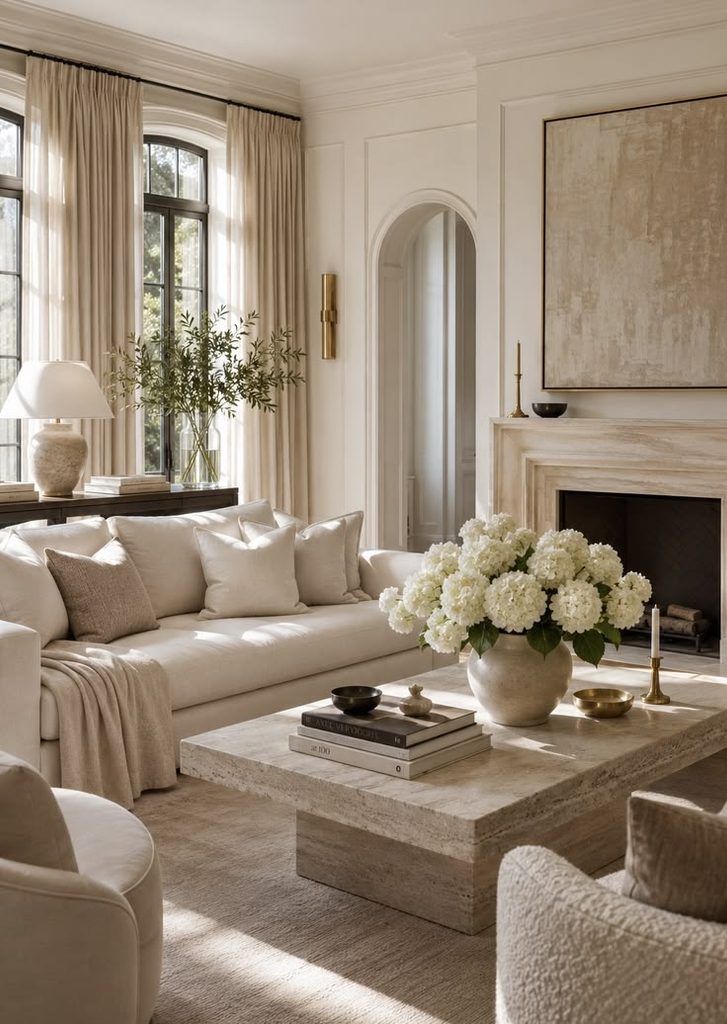
Master the Art of Expensive-Looking Neutrals
Neutral old money decor should feel rich, not like the saturation slider accidentally got turned off. This room works because all that cream is broken up with limestone, warm wood, linen, brass, greenery, textured upholstery, and architectural molding. It’s quiet, but definitely not boring—it’s giving “we don’t follow trends; the house has looked good since 1927.”
How to Get the Look: Build a tonal palette using several shades instead of one: ivory, warm white, oatmeal, mushroom, camel, and soft taupe all play beautifully together. Then create contrast through materials rather than loud color—think a stone or travertine coffee table, linen curtains, boucle or textured upholstery, aged brass, warm wood, and plaster or limestone details. Add oversized greenery and classic white flowers for softness, then keep accessories sparse and substantial. The trick is simple: fewer pieces, better textures, and absolutely no army of tiny beige knickknacks.
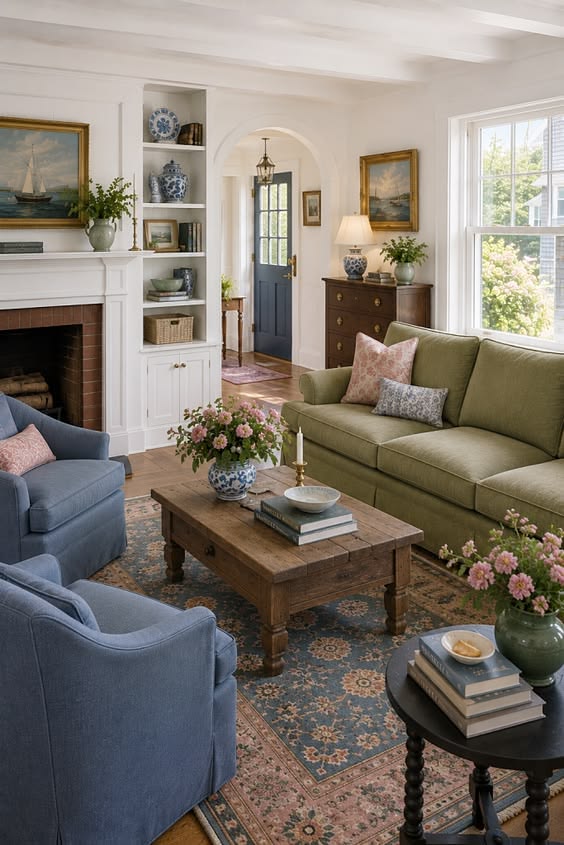
Let Your Colors Look Like They Have a Trust Fund
Old money decor does not have to mean fifty shades of beige. This room proves that dusty blue, muted olive, faded rose, antique gold, and warm wood can feel every bit as sophisticated when the colors are slightly softened and grounded in traditional pieces. It’s colorful without screaming for attention—which is exactly the point.
How to Get the Look: Choose muted, heritage-inspired colors instead of super-bright shades: sage and olive green, dusty blue, burgundy, faded pink, navy, and buttery cream are perfect starting points. Bring them in through upholstered furniture, Persian-style rugs, vintage artwork, ceramics, and pillows, then anchor everything with medium-to-dark wood furniture and warm brass accents. And please resist the urge to make every blue match every other blue. A little variation is what makes the room feel collected over decades instead of delivered Tuesday afternoon.
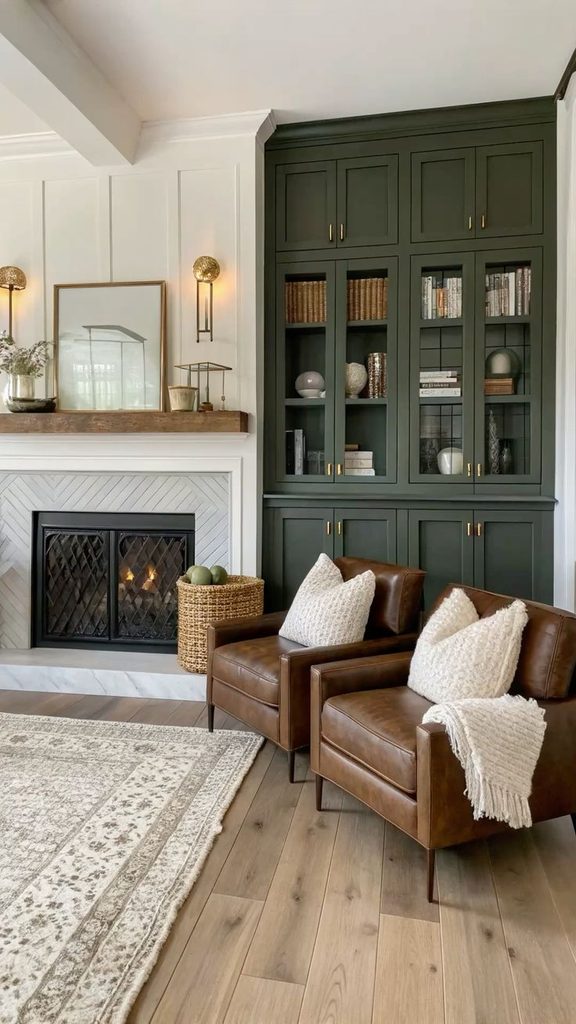
Go Dark Where It Counts
Nothing says old money decor quite like a room that isn’t afraid of a deep, moody color. That almost-black forest green cabinetry instantly gives the space depth, while cognac leather, warm wood, creamy textiles, and tiny brass details keep everything feeling rich instead of gloomy. It’s giving private library, inherited property, please don’t ask what the house is worth.
How to Get the Look: Pick one architectural feature—built-ins, cabinetry, a bookcase, doors, or even an entire wall—and paint it a sophisticated shade like deep olive, forest green, chocolate, burgundy, or charcoal. Then balance the drama with warm leather, aged brass hardware, natural wood, creamy upholstery, and a faded traditional rug. The secret is restraint: one beautifully moody moment looks expensive; making every surface compete with it does not.
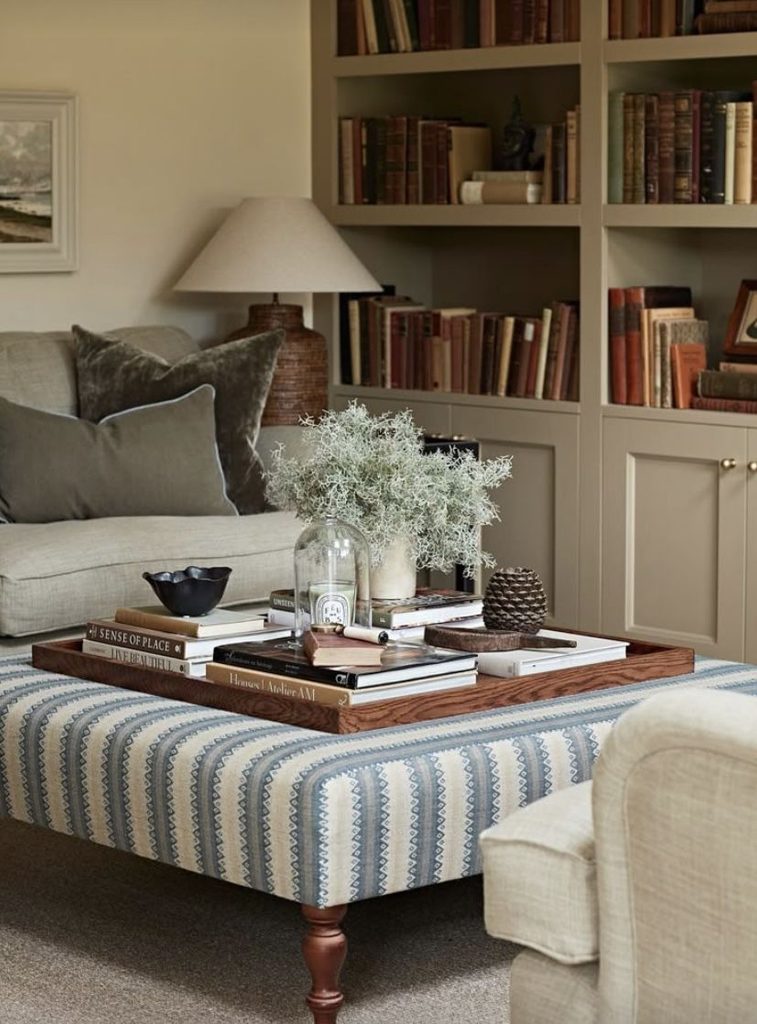
Make the Room Look Collected, Not Decorated
This is old money decor at its most effortless: built-in bookshelves filled with well-loved books, soft neutral upholstery, muted velvet pillows, warm wood, and just enough slightly random objects to suggest they’ve been hanging around for decades. Nothing looks overly coordinated—and that’s exactly why it works. The vibe is less I bought the entire room on Saturday and more oh, that old thing? We’ve always had it.
How to Get the Look: Start with a warm, muted palette of mushroom, taupe, cream, dusty blue, olive, and aged brown. Fill shelves primarily with real books, then casually work in framed photos, pottery, small sculptures, and vintage finds rather than rows of matching accessories. For the coffee table, layer books inside a substantial wooden tray and add one organic element—branches, greenery, or slightly unruly flowers—to keep everything from feeling too perfectly styled.
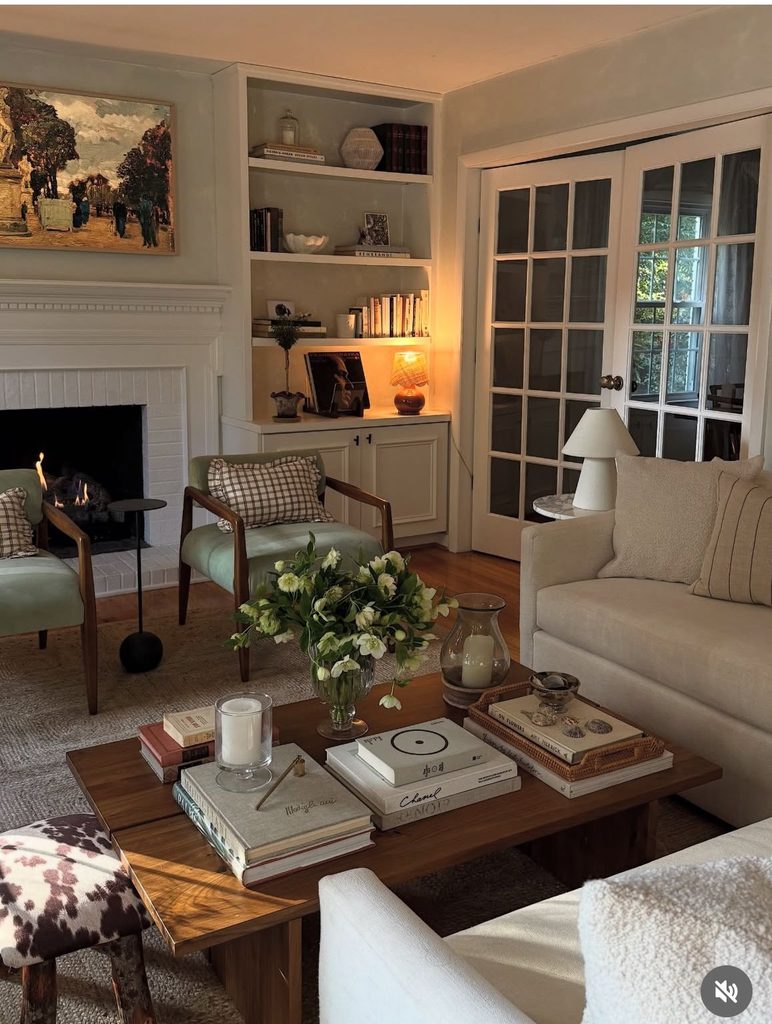
Master the Art of “Nothing Matches, But Somehow It Works”
This is where old money decor gets really good. The room mixes mid-century chairs, a traditional fireplace, contemporary coffee-table books, tailored upholstery, vintage-inspired artwork, and soft sage green without looking like it belongs to one specific decade. That little bit of tension is exactly what keeps an old money home from turning into a historical reenactment.
How to Get the Look: Forget buying a matching furniture collection. Start with timeless upholstered pieces, then mix in one or two vintage-style chairs, warm walnut furniture, traditional artwork, collected books, woven trays, and softly patterned textiles. Keep the palette muted—cream, warm wood, sage, tobacco brown, and dusty neutrals—so pieces from completely different styles still feel like they belong together.
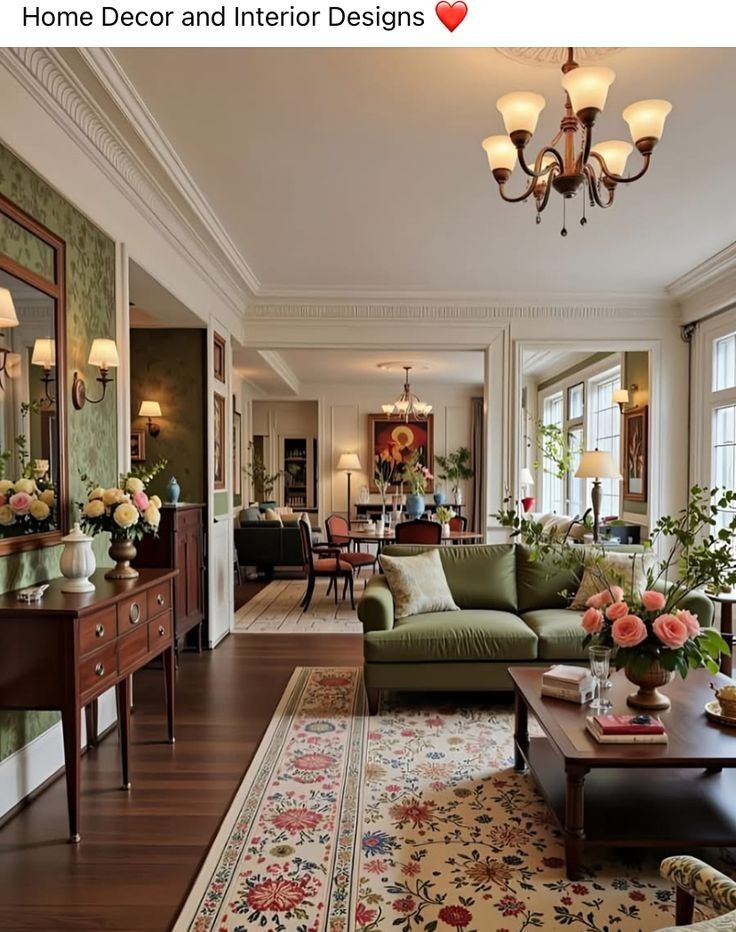
Let the Florals Be a Little Grandmother-Chic
Yes, florals can absolutely be old money decor—they just need to feel more English country house and less matching furniture showroom. The botanical rug, soft green upholstery, fresh roses, patterned wallpaper, dark wood furniture, and traditional lighting give this room that slightly romantic, lived-in look that feels like it has evolved over generations.
How to Get the Look: Start with one substantial floral or botanical pattern, like a vintage-style rug, wallpaper, or upholstered chair, and build around it with muted greens, cream, dusty rose, mahogany, and warm brass. Mix the pattern with solid upholstery and dark wood furniture so it doesn’t become overly sweet. Then add real flowers, traditional lamps, framed art, and a few slightly imperfect vintage pieces—the goal is beautiful family home, not everything arrived from the same catalog yesterday.
Old Money Decor Ideas That Look Timeless, Expensive & Collected
The best old money decor ideas aren’t really about making your home look expensive—they’re about making it look like it has a story. Mix beautiful woods, worn textiles, vintage-inspired artwork, collected books, classic lighting, and pieces with a little age instead of chasing whatever is trending this week. Give everything room to breathe, embrace a little imperfection, and remember: a home that looks quietly collected will always feel more luxurious than one that looks like it arrived in twelve matching boxes yesterday.
Leave a Reply