There is a common misconception that a small living room inherently limits your design potential. When floor space is tight, it’s easy to fall into the trap of pushing all your furniture against the walls, avoiding large decor pieces, or letting clutter quietly take over every surface. Before you know it, a cozy room starts to feel cramped, heavy, and visually confining.
However, some of the most charming, inviting, and sophisticated homes actually feature compact living spaces. The secret to unlocking their full potential isn’t knocking down walls; it’s mastering visual illusions and smart spatial planning. By playing with scale, optimizing natural light, and choosing furniture with breathing room, you can completely transform the geometry of a room.
Here is how to make a small living room look remarkably bigger, brighter, and effortlessly chic—without sacrificing an ounce of comfort.
Strategic Layout & Furniture Choices
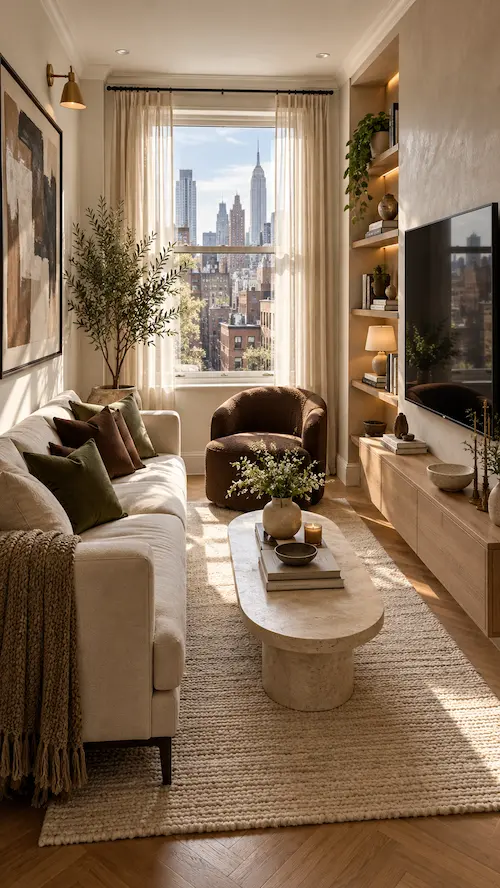
1. Choose Furniture with Raised Legs
Furniture that sits low to the ground blocks sightlines. Opt for sofas, armchairs, and credenzas with exposed, slender legs (mid-century modern styles work brilliantly). Allowing light and air to pass underneath instantly tricks the brain into seeing more floor space.
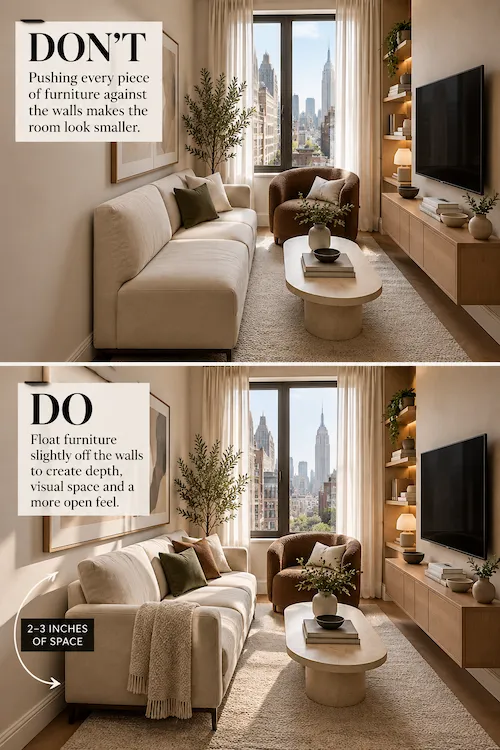
2. Float Furniture Off the Walls
Counterintuitively, pushing every piece of furniture flat against the walls emphasizes tight dimensions. Leaving even 2 to 3 inches of breathing room behind a sofa creates depth and shadow lines that make the perimeter feel larger.
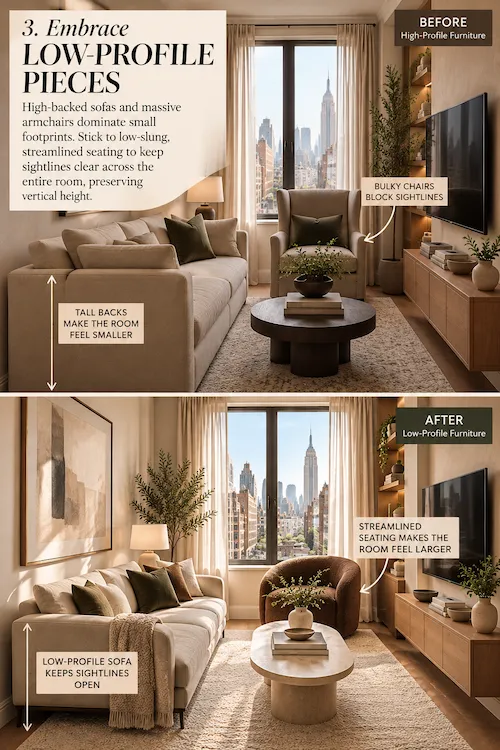
3. Embrace Low-Profile Pieces
High-backed sofas and massive armchairs dominate small footprints. Stick to low-slung, streamlined seating to keep sightlines clear across the entire room, preserving vertical height.
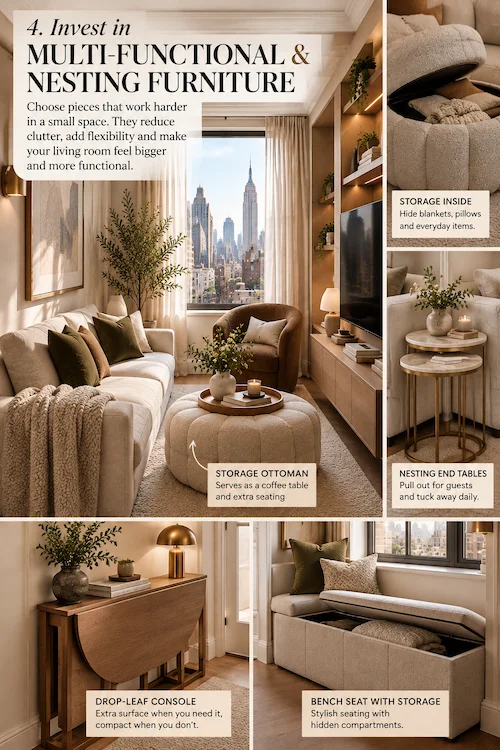
4. Invest in Multi-Functional & Nesting Furniture
Reduce clutter by choosing items that double down on function:
- Storage ottomans that serve as coffee tables and extra seating.
- Nesting end tables that pull out for guests and tuck away daily.
- Drop-leaf consoles or bench seats with interior compartments.
Lighting, Color & Paint Techniques
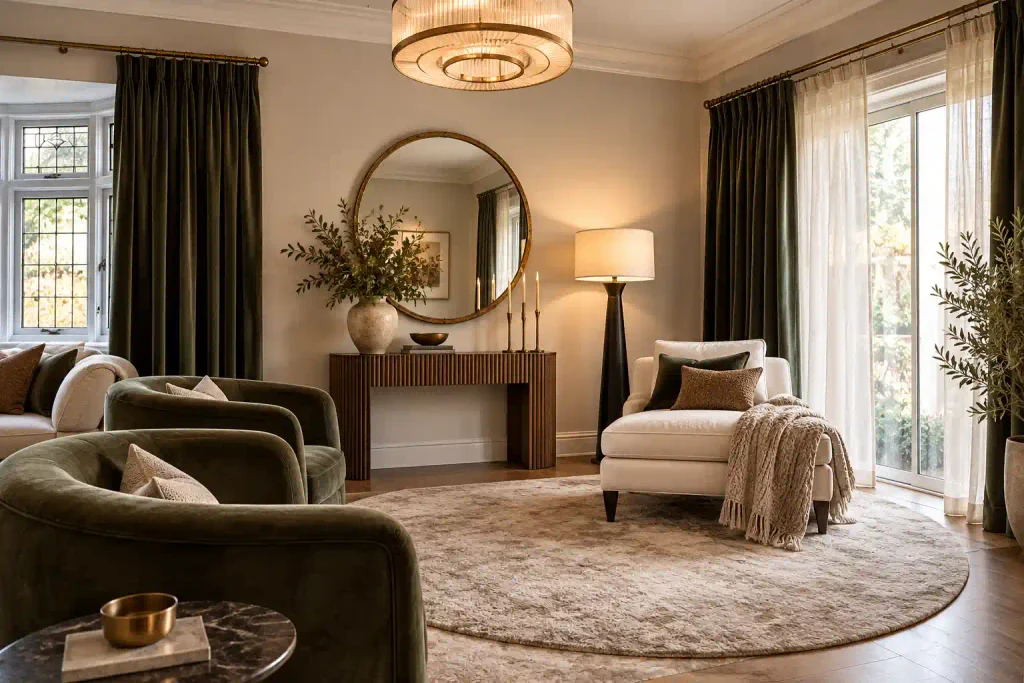
Strategic mirror placement doubles light and depth.
5. Hang Curtains High and Wide
Mount curtain rods just below the ceiling line (or crown molding) rather than right above the window frame, and extend the rod 6–12 inches wider than the window. This creates an optical illusion of soaring ceilings and grander window dimensions.
6. Use Large Oversized Mirrors Across Windows
Place a large accent mirror directly opposite or adjacent to a primary natural light source. It reflects light across dark corners and visually doubles the room’s depth.
7. Stick to a Monochromatic or Low-Contrast Palette
Drastic color contrasts break a small space into visual “chunks.” A light, cohesive color scheme—soft creams, warm greys, off-whites, or gentle sage—allows the eyes to glide continuously across surfaces.
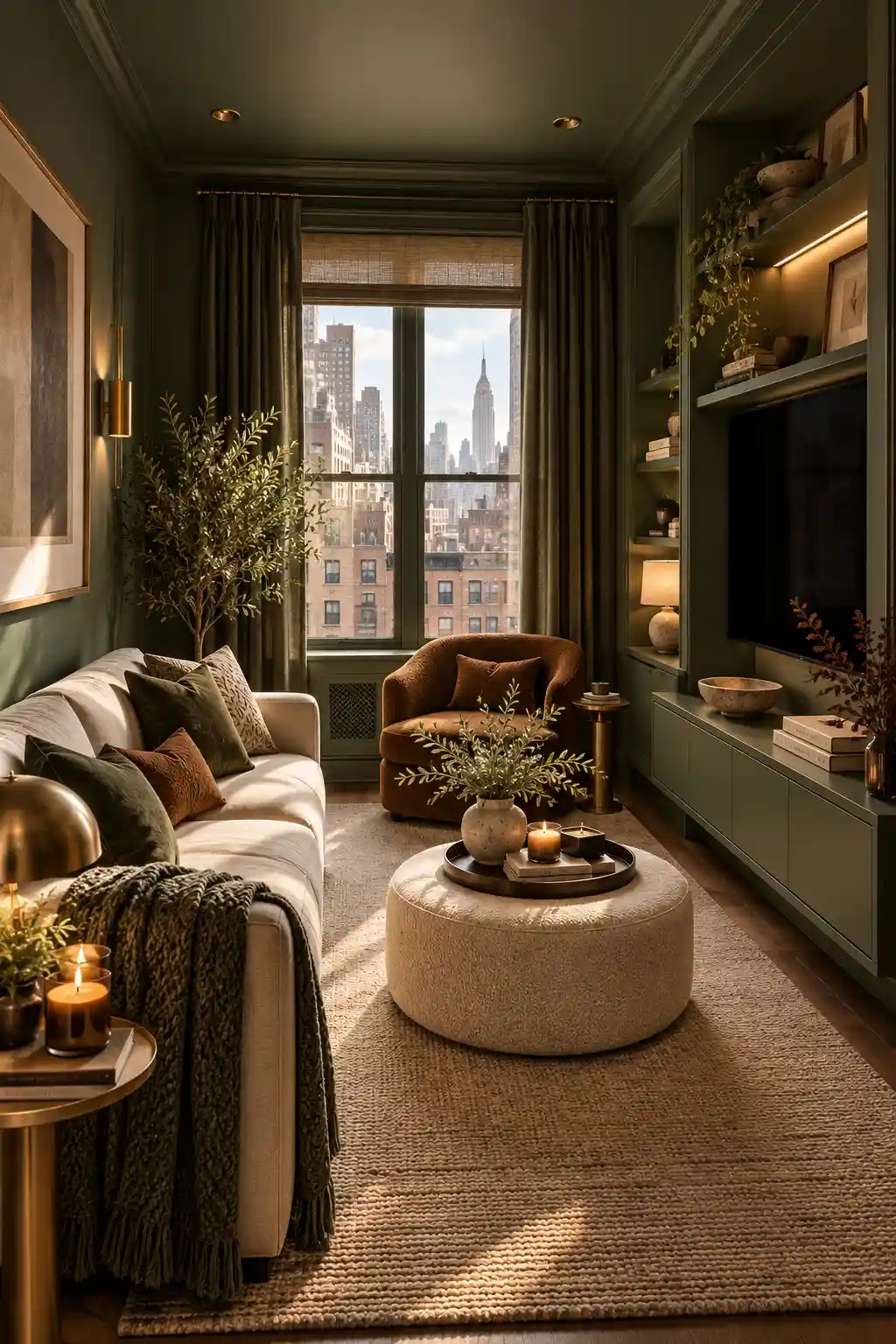
8. Try Color Drenching for Darker Spaces
If your readers prefer cozy or moody interiors, suggest color drenching: painting walls, trim, doors, and baseboards in the exact same shade (and finish). Eliminating line breaks softens room corners, making boundaries disappear.
Styling, Rugs & Visual Scale
9. Go Big with the Area Rug
A common mistake in small spaces is buying a tiny rug (“postage stamp rug”). Small rugs chop up the floor plan. Choose a rug large enough that at least the front legs of all major seating pieces sit comfortably on it, anchoring the room into one cohesive zone.
10. Incorporate Glass, Acrylic, or Lucite Elements
Clear materials—like a glass-topped coffee table or acrylic accent chairs—provide full functionality without adding visual mass. Light passes straight through them, leaving the room feeling uncluttered.
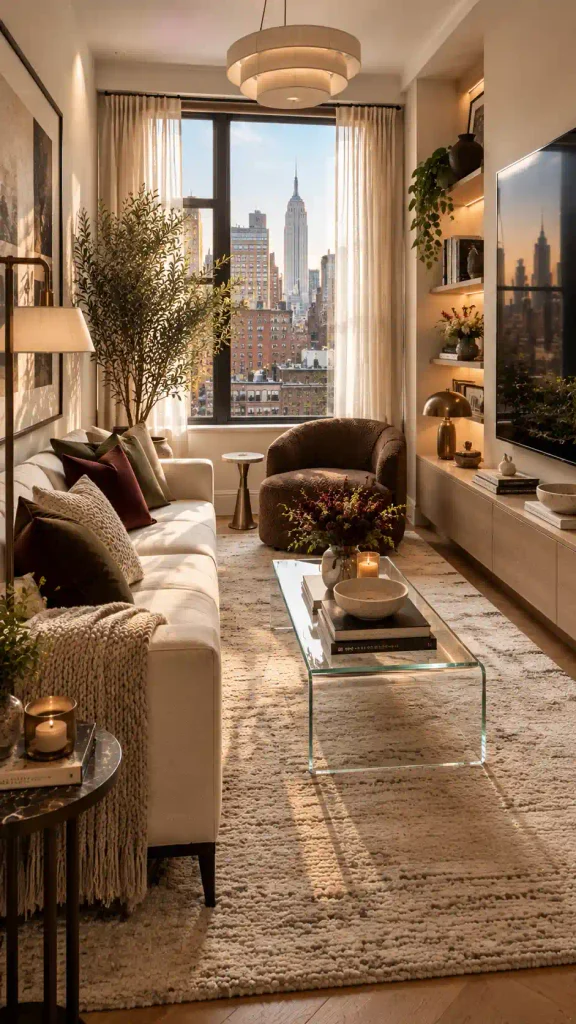
11. Draw the Eye Upward with Vertical Styling
Utilize vertical space to draw attention away from limited floor square footage:
- Floor-to-ceiling book display stacks.
- Vertical gallery walls with slim frames.
- Tall, slender indoor plants like a Fiddle Leaf Fig or Snake Plant.
12. Choose One Large Accent Piece Over Many Small Ones
A dozen small decor items make a room feel chaotic and cramped. Decorate using the “scale rule”: one statement piece of oversized artwork or a single large vase makes a small room feel intentional, curating an uncluttered, high-end aesthetic.
Clutter Management & Architectural Tricks
13. Ditch Overhead Centerpieces for Layered Task Lighting
A single overhead ceiling light casts harsh shadows and shrinks room corners. Layer ambient lighting with wall sconces, floor lamps, and LED strip lights tucked into shelving to illuminate every corner and expand visual boundaries.
14. Choose Sheer, Light-Filtering Drapery
Heavy velvet or dense blackout drapes weigh down a room’s perimeter. Light-filtering linen or sheer panels soften windows while maximizing natural daylight.
15. Streamline Traffic Paths
Keep walkways clear and unobstructed. Ensure the entry path into the room offers a straight, uninterrupted line of vision across to a window or focal point, immediately making the entire home feel open and airy.
tips
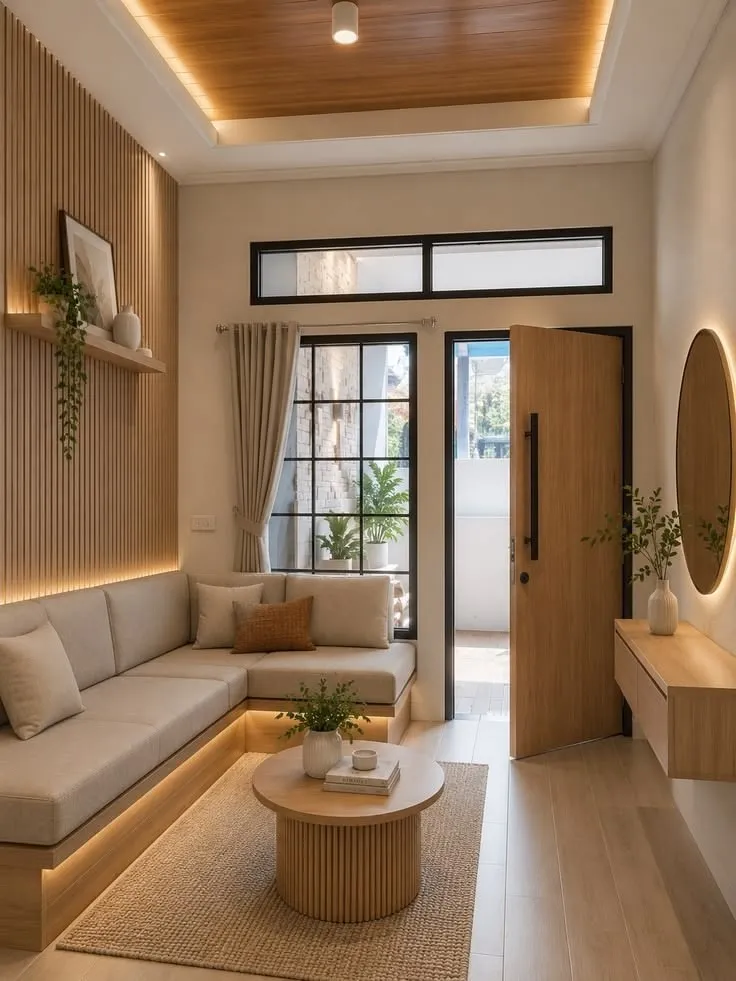
Want your small living room to feel twice as spacious? Take notes from this clever design! Vertical wood slats draw the eye upward, a floating console keeps the floor visible, and soft neutral furniture creates an airy, seamless look. The oversized mirror is the finishing touch, reflecting light and giving the illusion of extra space. Small room, big design energy.
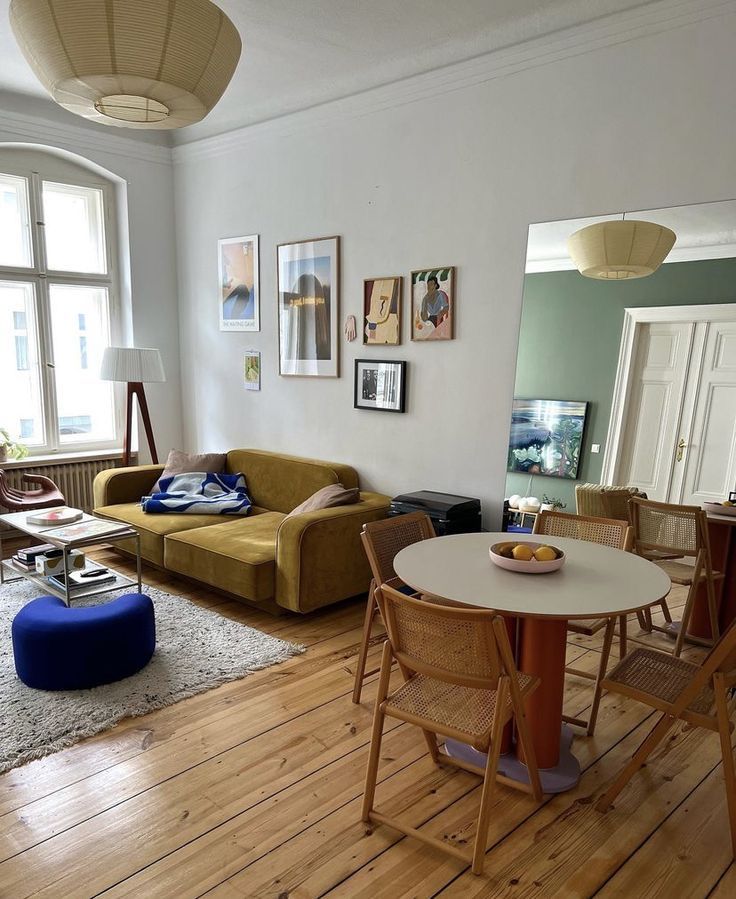
Who says a small living room can’t have it all? This clever layout combines a cozy seating area and dining space without making the room feel cramped. The round dining table improves flow, the oversized mirror creates the illusion of more space, and the leggy furniture keeps the floor visually open. Proof that you don’t need more square footage, just smarter styling!
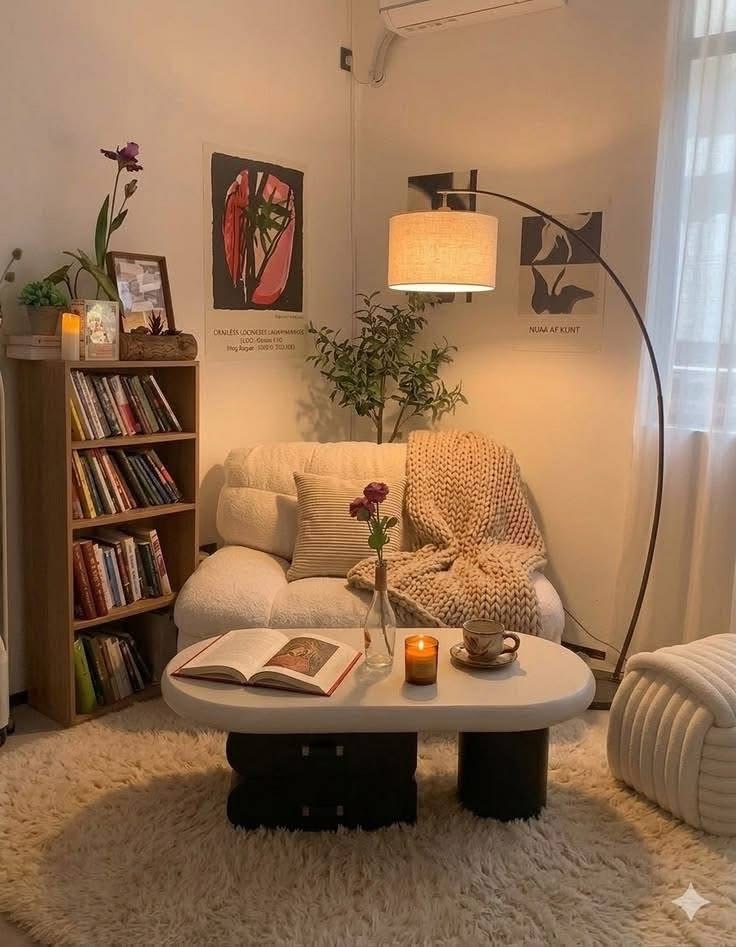
Small living room? Make every corner count! This cozy setup transforms an overlooked corner into a stylish lounging spot with a compact loveseat, slim vertical bookshelf, and statement arc floor lamp that provides overhead lighting without taking up extra floor space. The low-profile coffee table keeps sightlines open, while layered textures add warmth without overwhelming the room. Tiny space, major cozy-girl energy!
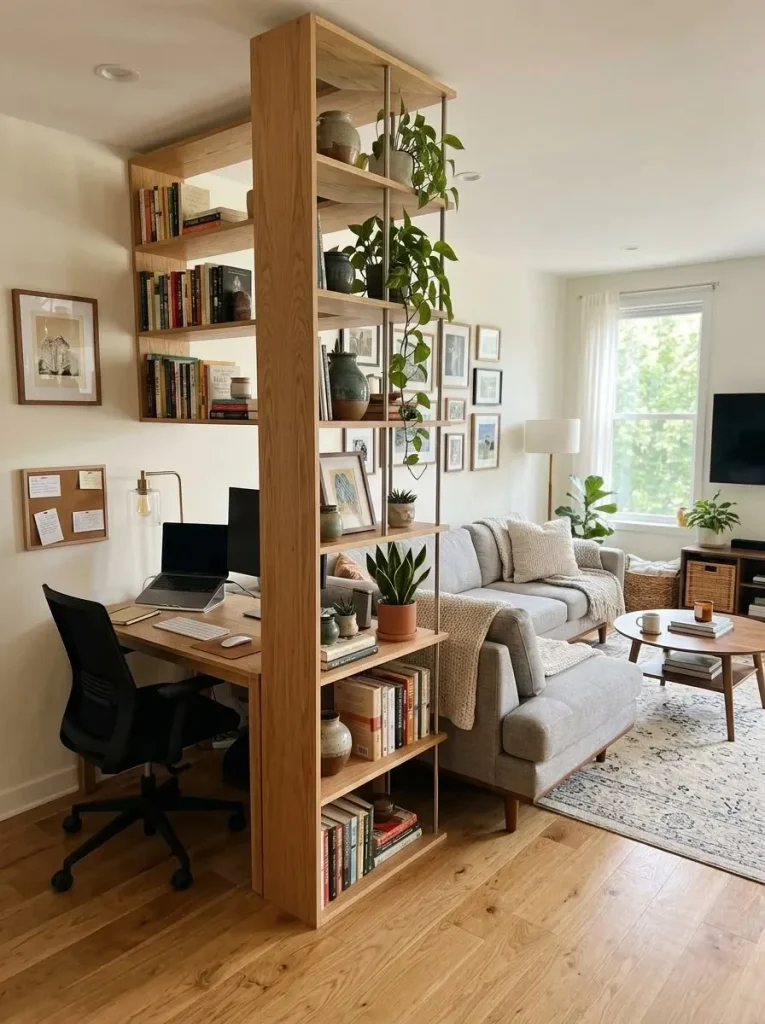
Small living room, big multitasking energy! This clever design uses an open wooden bookshelf to separate a cozy living area from a compact home office without making either space feel boxed in. The floor-to-ceiling shelving draws the eye upward, adds valuable storage, and lets natural light pass through. It’s a stylish way to define separate zones while keeping your small space feeling bright, open, and beautifully organized.
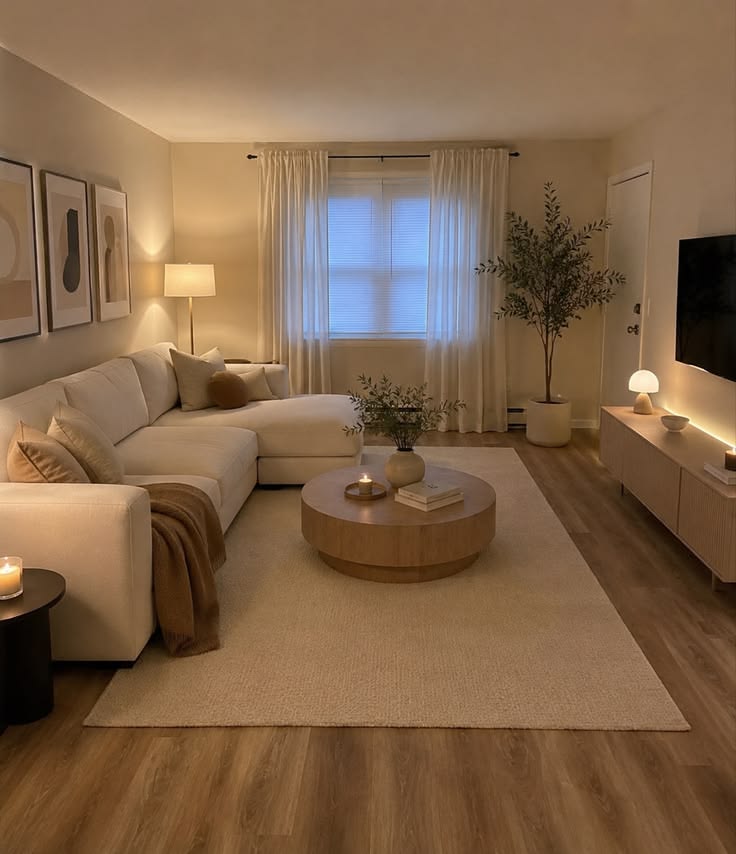
Want your small living room to look bigger without knocking down a single wall? This cozy setup proves that choosing the right proportions makes all the difference! The oversized area rug anchors the furniture into one cohesive space, while the low-profile sectional and floating TV console keep the room feeling open. Floor-length curtains draw the eye upward, and soft, coordinated colors create a seamless look. Sometimes, bigger isn’t about square footage—it’s about styling smarter!
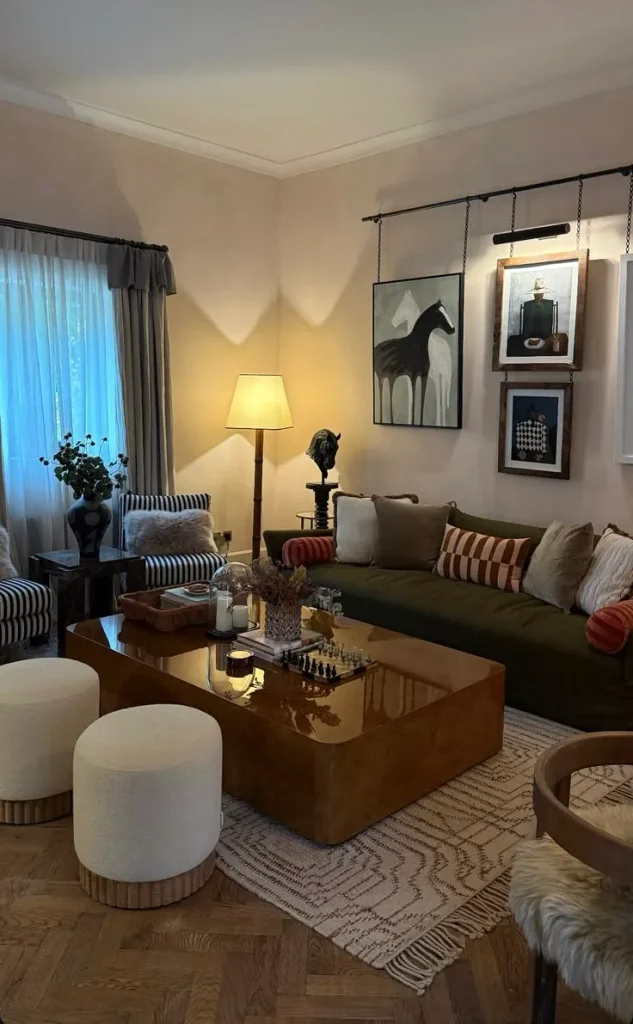
Who says a small living room has to play it safe? This stylish setup proves that bold furniture and layered decor can make a compact space feel beautifully curated. The oversized glossy coffee table creates a statement centerpiece, while the striped accent chair, plush ottomans, and gallery-style wall art add personality without requiring extra square footage. The trick is keeping furniture grouped together and leaving clear walking paths. Small space, serious designer energy!
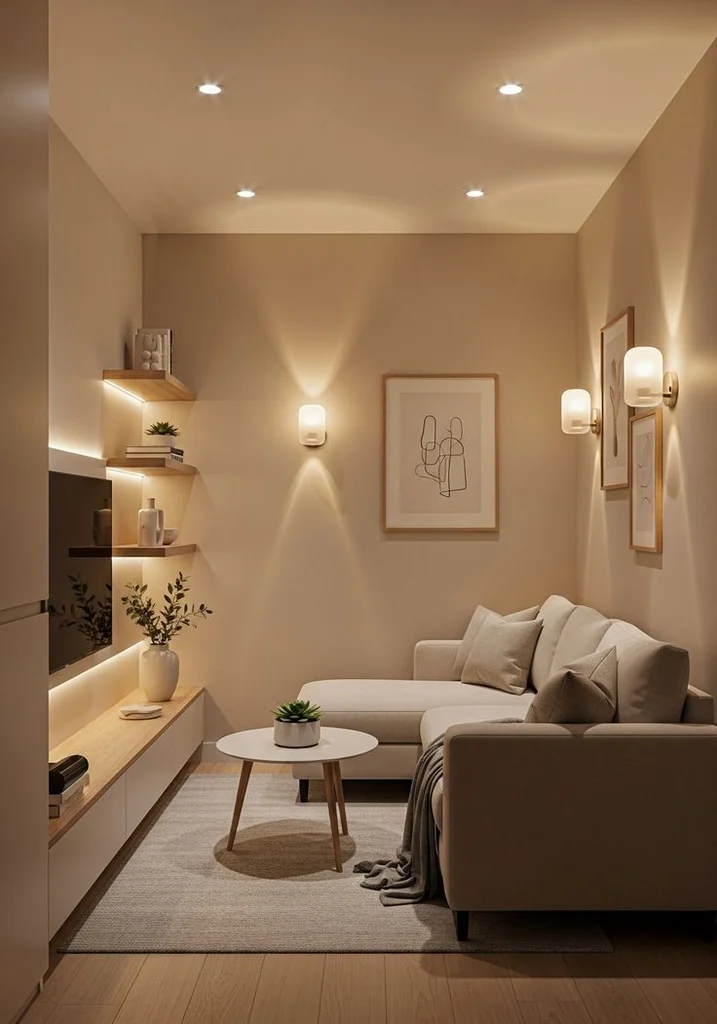
Small living room? Let your lighting do the heavy lifting! This beautifully designed space uses recessed ceiling lights, wall sconces, and illuminated floating shelves to brighten every corner without cluttering the floor. The compact sectional maximizes seating, while the wall-mounted TV and slim console free up valuable space. Keeping the walls and furniture in similar tones creates a seamless, airy look. Proof that a tiny living room can still feel like a luxury retreat!
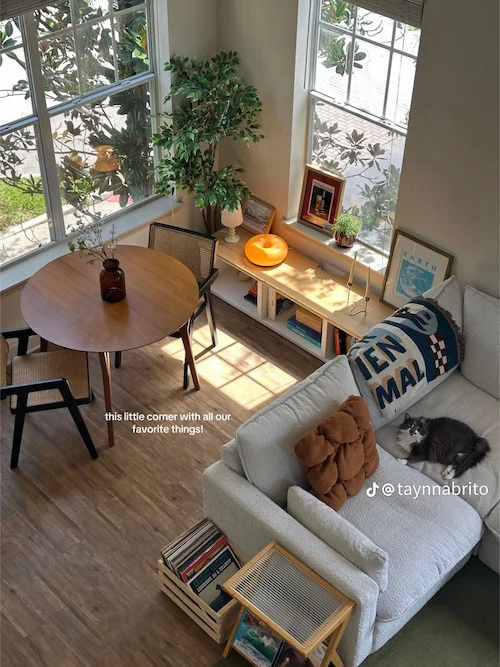
Small living room, but make it bright, airy, and effortlessly chic! This clever corner uses a round dining table to maximize seating without blocking walkways, while the low-profile sofa and slim storage console keep the space feeling open. Large windows flood the room with natural light, making everything feel more spacious. The secret? Choosing furniture that works with your layout instead of fighting it. Tiny apartment, major Pinterest-worthy energy!
How to Make a Small Living Room Look Bigger: Designer Tricks That Actually Work
Maximizing a compact living room isn’t about stripping away your personality or living with less; it’s about making smarter design choices that let your space breathe. By floating your furniture, drawing the eye upward with vertical lines, and embracing a light, cohesive color palette, you can completely redefine the scale of your room. You don’t need sprawling square footage to create a breathtaking home—just a few clever design tricks to make every single square inch work harder and look larger.
Leave a Reply